If you're about to be deployed or your work involves exposure to chemicals or toxins or a chance of injury, consider protecting your sperm health and future chances for a family.
Legacy patients include members of the military, police, firefighters, manufacturing & agricultural workers, healthcare workers, and high-impact athletes, to name a few.
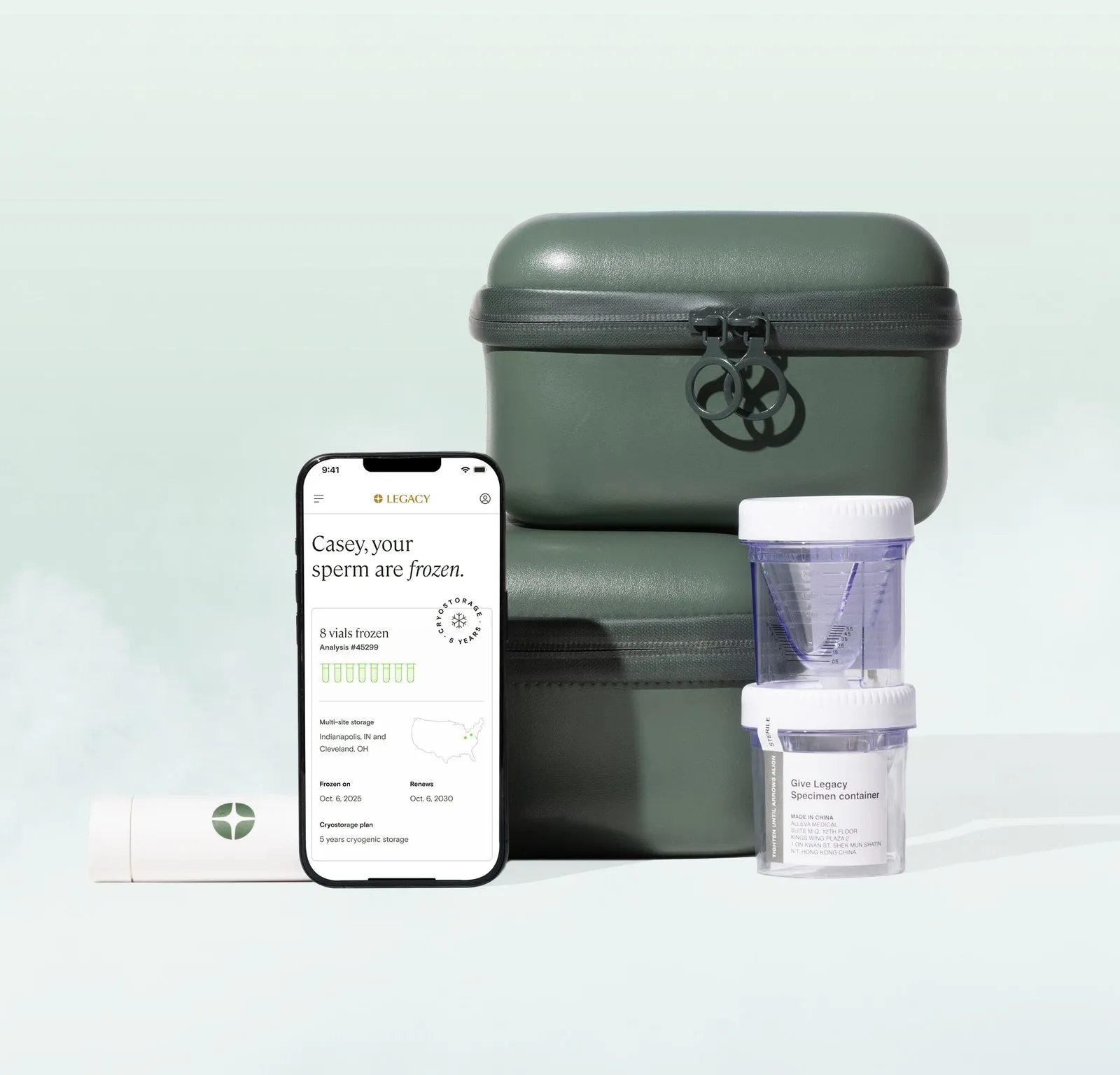
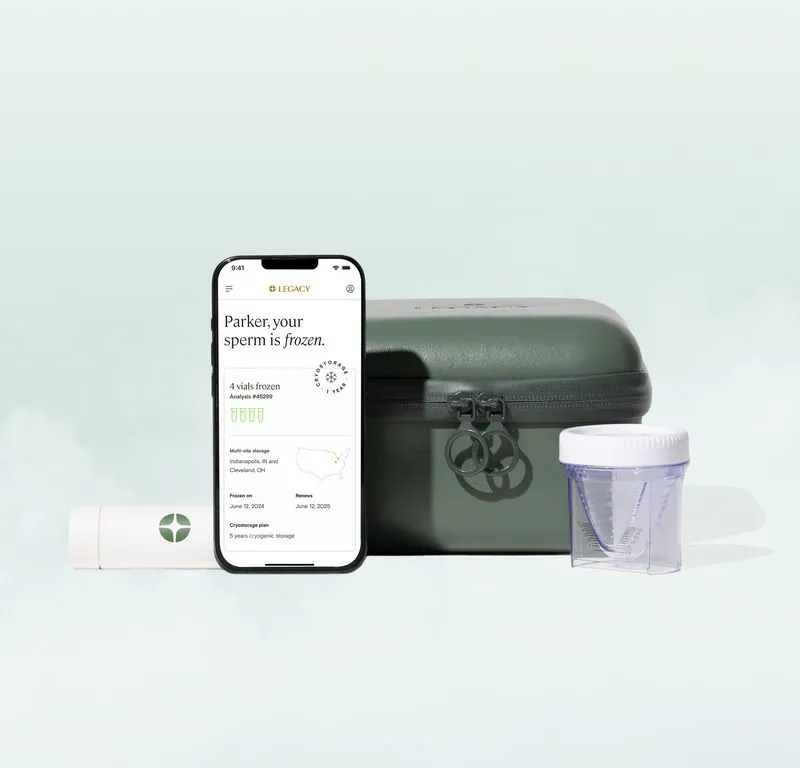
Our state-of-the-art mail-in kit lets you test or freeze your sperm from the comfort of your couch. No clinic or awkward collection room necessary.
We’re 10x faster than a traditional clinic. Freeze your sperm quickly before deployment or get testing results in just 48 hours.
Legacy is in-network with EmblemHealth (covering NYPD), TriWest (covering military veterans), TRICARE West, and other major health plans.
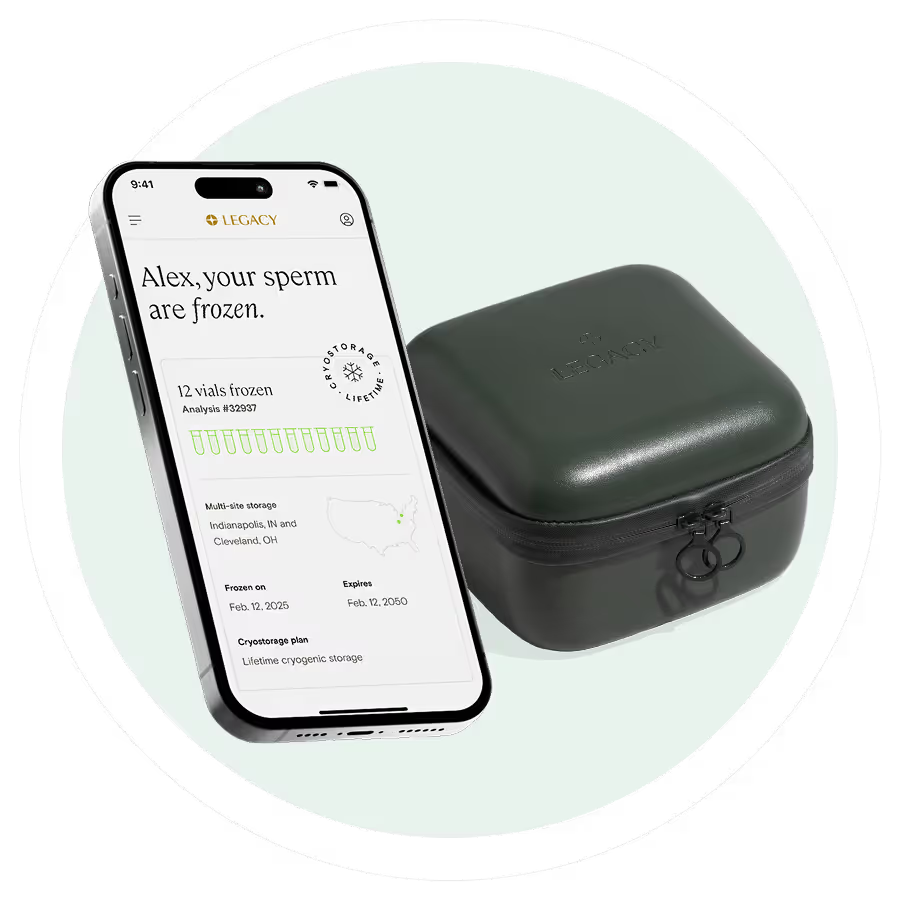
Your kit arrives in discreet packaging, your results are available on a private virtual dashboard, and your sample is stored in multiple locations.
FSA/HSA eligible
Freezing & testing for wherever you are in your journey
1 year of storage (renewable)
1 collection kit for 1 sample
Does not include pre-freeze STI test
Does not include Advanced Semen Analysis with DNA fragmentation testing
3 years of storage (renewable)
2 collection kits for 2 samples
Pre-freeze STI test
Does not include Advanced Semen Analysis with DNA fragmentation testing
25 years of storage
3 collection kits for 3 samples
Pre-freeze STI test
Advanced Semen Analysis with DNA fragmentation testing

Starting September 14, 2026, the Department of Defense is launching a three-year pilot program that reimburses eligible service members for sperm and egg freezing, with a stipend of up to $500 a year for sperm retrieval and preservation. It was mandated by the FY2025 National Defense Authorization Act and applies to both military treatment facilities and civilian fertility providers, including clinics outside the TRICARE network.
You may qualify if the following apply to you:
Your commander will need to validate your eligibility in writing as part of the reimbursement process.
Beginning September 14, 2026, this stipend is meant to cover the initial analysis and freezing plus ongoing cryostorage, up to a total of $500 per year.
Legacy offers a 1-sample, annual freezing plan that's under $500 for the first year and $245 for ongoing freezing. Learn more about pre-deployment freezing plans.
The Department of Defense's Fertility Preservation Pilot Program begins September 14, 2026.
In order to receive reimbursement:
You likely qualify if you've received orders for hazardous duty pay, or expect to within the next 120 days, or if you'll be geographically separated from a spouse, domestic partner, or dating partner for 180 days or more due to military orders.
Reimbursement rules are set by the DoD, not by Legacy. For the latest requirements, check with your unit's admin office.
Military work involves the possibility of combat-related injury and exposure to chemical warfare or toxins, both of which can negatively impact a male’s fertility or a couple’s pregnancy outcomes. A study of veterans of the US War on Terror found that rates of infertility were significantly higher—nearly twice as high—among veterans compared to civilians.
There are many chemicals, including endocrine disruptors and toxins, that can impact fertility and reproductive hormones. A brief, non-exhaustive list:
Mustard gas (sulfur mustard), associated with more than 4x the risk of male-factor infertility
Pesticides
Lead and other heavy metals
Microplastics and petrochemicals
Research shows that sperm-producing people who work in the agriculture, herbicides, construction, machinist, plastic production, printing industry, tobacco processing, and welding industries may see a negative impact on their fertility, including reduced sperm count and increased risk of miscarriage and birth defects.
Firefighters are at a higher risk of infertility than those who work in other professions. The scene of a fire may expose a person to a multitude of different chemicals, both in the burn and in the fire-suppressing foams (which typically contain PFAS). Exposure to PFAS is associated with decreased semen quality and reduced testosterone levels.
In addition, firefighters are at risk of increased scrotal temperature, either by being directly affected by the heat from fires or by heavy protective gear. Prolonged, increased heat around the scrotum can affect sperm production for months afterward.
The chances of conceiving with frozen sperm depend on several factors:
IUI pregnancy rates range from 10–25% per cycle; IVF success rates range from 5–50% per cycle. So, you may need multiple attempts to achieve pregnancy. The good news is that using frozen sperm doesn’t affect your chances of success. IUI and IVF pregnancy rates are the same for those using frozen sperm, compared to “fresh.”
The process of sperm freezing is very quick with Legacy:
In theory, it can take as little as 3 days from start to finish. So, you don’t need to postpone your hormone therapy in order to accomplish your fertility preservation goals.
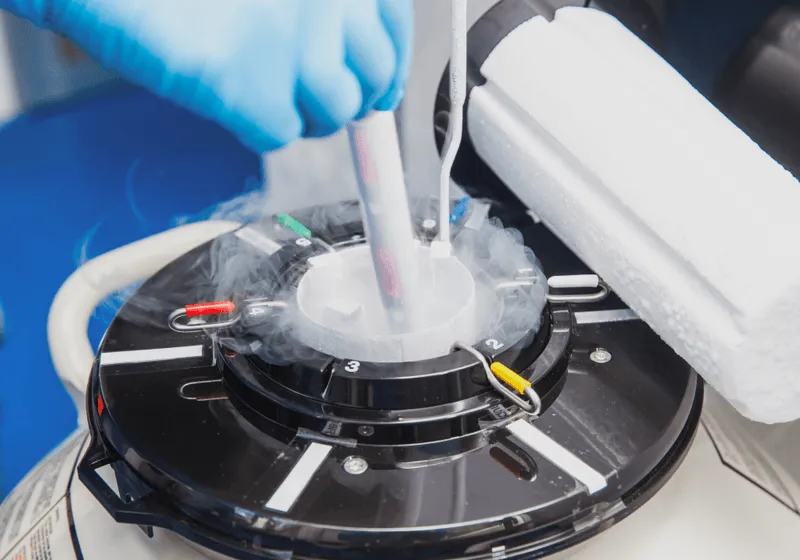
As long as sperm is kept frozen in a high quality cryogenic lab like Legacy’s, it can be stored indefinitely with no significant impact on its quality or the chances that it will result in a healthy pregnancy. That means you can keep your sperm frozen until you’re ready to start a family.
You can use your frozen sperm by transferring it to a healthcare provider or clinic for assisted reproductive methods such as IVF (in vitro fertilization) and IUI (intrauterine insemination). Transferring your sperm from Legacy to a provider is easy. You can start the process with a few clicks in your client dashboard.
Legacy is committed to supporting military families through discounts and special programs.
Both active-duty military members and Veterans are eligible for discounts on our products through WeSalute (20% off) and ID.me (10% off).
We partner with several military-focused organizations to offer discounted and free services to members of the military and veterans. Learn more about Legacy’s military partnerships.
Probably! We want to help expedite the process. Contact us at clientservices@givelegacy.com.